
Kitchen Fire Extinguisher Manufacturer in India | LIFEGUARD®
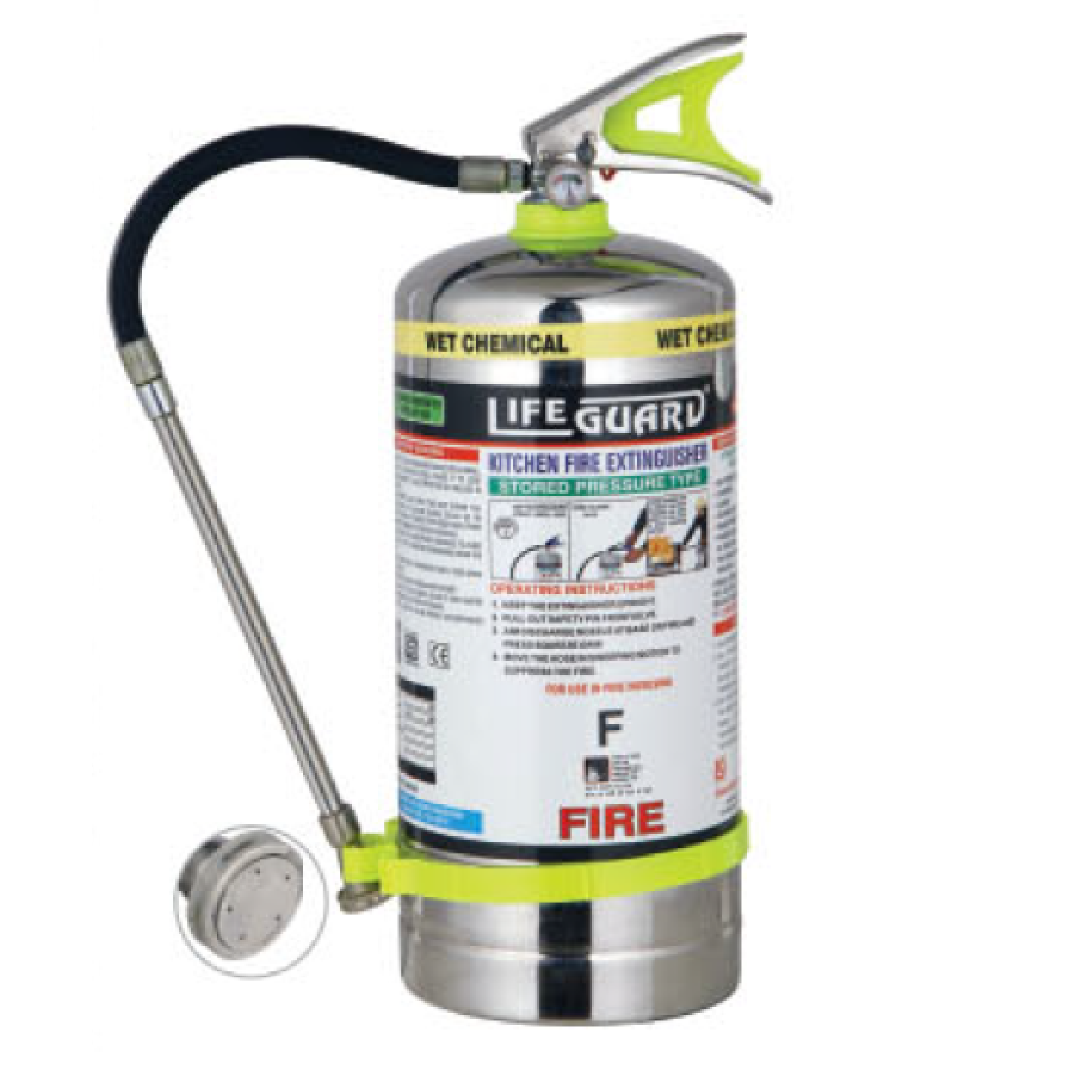
Kitchen Type Fire Extinguishers Manufacturer in India | LIFEGUARD®
Advanced Kitchen Fire Extinguishers for Commercial Kitchens and Food Service Facilities
Commercial kitchens require specialised fire protection solutions to address the risks associated with cooking oils, deep-fat fryers, gas-fired cooking equipment, electrical appliances, and high-temperature cooking processes. A small fire involving overheated cooking oil can escalate rapidly, threatening kitchen staff, property, business continuity, and the safety of customers.
LIFEGUARD® Kitchen Type Fire Extinguishers, from United Fire Equipments Pvt. Ltd. (UFEPL), are part of a comprehensive approach to kitchen fire safety. Designed for applications where cooking-related fire hazards require careful consideration, kitchen fire extinguishers help businesses strengthen their emergency preparedness and protect critical cooking areas.
Whether you operate a hotel kitchen, restaurant, cafeteria, commercial food outlet, catering facility, institutional kitchen, or food processing unit, selecting the appropriate fire extinguisher is an important part of an effective kitchen fire protection strategy.
What Is a Kitchen Type Fire Extinguisher?
A kitchen type fire extinguisher is a fire-fighting appliance selected for hazards associated with cooking oils, fats, and commercial cooking equipment. In many applications, this means a wet chemical fire extinguisher specifically designed and tested for fires involving cooking oils and fats.
Cooking oil fires can be particularly dangerous because oil may reach temperatures significantly above the boiling point of water. Applying water to burning cooking oil can cause violent splashing and fire spread. Therefore, the correct extinguishing agent and application method are essential.
Wet chemical extinguishers are designed to discharge an appropriate agent that helps cool the burning oil and form a soapy surface layer through a process commonly known as saponification. This helps suppress flames and reduce the likelihood of reignition when the extinguisher is used correctly and under suitable conditions.
The precise fire rating, capacity, application range, and suitability of a LIFEGUARD® kitchen type extinguisher should always be confirmed from the applicable product datasheet, markings, and test documentation.
Why Are Kitchen Fire Extinguishers Important?
Kitchen fires can originate from unattended cooking, overheated oils, malfunctioning equipment, grease accumulation, gas leaks, and electrical faults. In commercial kitchens, continuous cooking operations and the presence of extraction hoods and grease-laden ducts can increase the complexity of fire prevention and emergency response.
A suitable kitchen fire extinguisher can help address the initial stages of an appropriate cooking-related fire when used by a trained person with a safe escape route available.
Key benefits of selecting appropriate kitchen fire protection equipment include:
Specialised protection for designated cooking oil and fat fire hazards.
Support for emergency preparedness in commercial cooking environments.
Reduced risk of inappropriate extinguishing methods being used on burning oil.
Improved readiness for kitchens operating deep-fat fryers, griddles, ranges, and other cooking equipment.
Integration with a wider fire safety plan that may include kitchen hood suppression, alarms, emergency isolation, and staff training.
An extinguisher is only one component of kitchen fire safety. High-risk cooking operations may also require a professionally designed automatic kitchen hood fire suppression system.
Understanding Class F and Class K Kitchen Fires
Kitchen fire classifications vary by standard and jurisdiction. Under European and many international classification systems, fires involving cooking oils and fats are generally identified as Class F. Under the North American classification system, commercial cooking oil and fat fires are generally identified as Class K.
These classifications describe broadly similar cooking-related hazards, but the applicable product requirements and testing arrangements are not automatically interchangeable.
When purchasing a kitchen type fire extinguisher, check the classification used in the intended market and verify that the product is approved or tested for the relevant cooking fire hazard.
It is important not to assume that an ordinary ABC dry powder or carbon dioxide extinguisher provides the same specialised protection as an extinguisher specifically designed for cooking oil fires.
LIFEGUARD® Kitchen Fire Extinguisher Applications
LIFEGUARD® kitchen fire safety equipment can be evaluated for suitable applications across commercial, institutional, and industrial cooking environments.
Hotels and Hospitality Kitchens
Hotel kitchens handle continuous cooking, frying, baking, and food preparation. Appropriate extinguishers and a coordinated fire protection plan help address cooking-related risks in food preparation areas.
Restaurants, Cafés and Quick-Service Restaurants
Restaurants and quick-service food outlets often use fryers, grills, gas ranges, and high-output cooking equipment. Suitable kitchen fire extinguishers form an important part of their emergency response arrangements.
Commercial Catering and Cloud Kitchens
Central kitchens, cloud kitchens, and catering facilities may operate several cooking stations in compact spaces. Correctly selected extinguishers can help support fire preparedness for identified cooking hazards.
Institutional and Industrial Kitchens
Hospitals, universities, schools, corporate cafeterias, railway catering facilities, and industrial canteens need appropriate fire safety equipment to protect personnel and maintain safe food service operations.
Food Processing and Frying Facilities
Food production operations involving heated edible oils and frying processes require a hazard-specific assessment. Depending on the process, additional fixed suppression and engineered fire protection measures may be necessary.
How Does a Wet Chemical Kitchen Fire Extinguisher Work?
A wet chemical extinguisher is designed to control suitable cooking oil and fat fires through a combination of cooling and surface-layer formation.
1. Controlled agent discharge: The extinguisher delivers the formulated agent onto the burning cooking medium using its designed nozzle and discharge pattern.
2. Flame suppression: The agent interacts with the hot cooking oil or fat, helping suppress the flames.
3. Surface-layer formation: Where the agent chemistry is designed for this purpose, a soap-like layer forms over the oil, helping separate the fuel from oxygen and reducing the potential for reignition.
4. Cooling: The agent helps lower the temperature of the burning cooking medium, supporting control of the fire.
The extinguisher must be used according to the manufacturer's instructions. Users should never attempt to move a burning fryer, pour water onto burning oil, or continue fighting a fire when conditions are unsafe.
Kitchen Fire Extinguisher Selection Guide
Selecting the correct extinguisher requires an assessment of the cooking equipment, fuel, electrical hazards, ventilation arrangements, and applicable local regulations.
Cooking oils and fats: Consider a purpose-designed wet chemical extinguisher with the relevant cooking fire classification and rating.
Electrical appliances: Select equipment appropriate for the electrical hazard and applicable local requirements; isolate power where it is safe to do so.
Gas-fired cooking equipment: Provide suitable isolation arrangements and an emergency response plan in addition to appropriate portable extinguishers.
Kitchen hoods and extraction ducts: Assess the need for a dedicated automatic kitchen hood suppression system designed for the specific equipment and duct arrangement.
General surrounding hazards: Determine whether additional extinguishers are required for other fire classes in the kitchen and adjoining areas.
The quantity, capacity, rating, location, and type of extinguishers should be determined by a competent fire safety professional in accordance with applicable standards, building requirements, and the actual risk assessment.
Portable Kitchen Fire Extinguishers and Automatic Kitchen Suppression Systems
Portable extinguishers and fixed kitchen suppression systems serve complementary purposes.
A portable kitchen fire extinguisher can be used by a trained person to tackle a suitable incipient-stage fire, provided the fire is small, conditions are safe, and an escape route remains available.
An automatic kitchen hood suppression system is designed to detect and suppress specified fires around protected cooking appliances, hoods, and associated ductwork. Depending on the system design, it may also initiate fuel or electrical shutdown.
For commercial kitchens with deep-fat fryers or substantial cooking operations, an integrated fire protection strategy may be more appropriate than relying exclusively on portable extinguishers.
Why Choose LIFEGUARD® for Kitchen Fire Safety Equipment?
United Fire Equipments Pvt. Ltd. manufactures fire safety equipment under the LIFEGUARD® brand and has served fire protection requirements since 1991.
With experience across industrial, commercial, institutional, and infrastructure applications, UFEPL provides fire safety equipment for customers seeking practical solutions to identified fire hazards.
Customers evaluating LIFEGUARD® kitchen type fire extinguishers should review the available product specifications, extinguishing agent, capacity, fire rating, applicable certifications, operating instructions, and maintenance requirements to establish suitability for their kitchen.
Our team can assist with product enquiries and discussions about kitchen fire protection requirements, subject to the available product range and relevant technical documentation.
Frequently Asked Questions About Kitchen Type Fire Extinguishers
Which fire extinguisher is best for commercial kitchen fires?
A wet chemical extinguisher specifically rated for cooking oil and fat fires is commonly selected for commercial cooking hazards. The appropriate product must match the cooking equipment, applicable fire classification, and local requirements.
What is the difference between a Class F and Class K fire extinguisher?
Class F is used for cooking oil and fat fires under European and many international classification systems. Class K is used for similar cooking-related hazards in the North American system. The applicable testing and product requirements must be verified for the intended market.
Can an ABC fire extinguisher be used on a deep-fat fryer fire?
An ordinary ABC dry powder extinguisher should not be assumed to provide the specialised protection required for a deep-fat fryer fire. Use an extinguisher specifically suitable for the cooking oil hazard, following its instructions and the site's emergency procedures.
Can water be used on a kitchen oil fire?
No. Water can cause burning cooking oil to splatter violently and spread the fire. Never pour water onto burning oil or a burning deep-fat fryer.
Are kitchen fire extinguishers required in restaurants and hotels?
Requirements depend on the jurisdiction, building use, fire safety regulations, and risk assessment. Restaurants and hotels should consult the applicable fire authority requirements and a competent fire safety professional.
What is the difference between a kitchen fire extinguisher and a kitchen hood suppression system?
A portable extinguisher is manually operated and used by a trained person where conditions are safe. A fixed hood suppression system protects specified cooking appliances and associated areas according to its engineered design and may provide automatic activation and equipment shutdown.
How often should a kitchen fire extinguisher be inspected?
Inspection and maintenance intervals depend on the applicable standard, local regulations, and manufacturer instructions. Extinguishers should be inspected, serviced, and recharged by competent personnel as required, and immediately after use.
Contact LIFEGUARD® for Kitchen Fire Extinguisher Requirements
United Fire Equipments Pvt. Ltd. welcomes enquiries from hotels, restaurants, catering companies, food processing businesses, institutional kitchens, commercial kitchen designers, contractors, and fire safety consultants.
United Fire Equipments Pvt. Ltd. (UFEPL)
LIFEGUARD® – Manufacturer of ISI Certified Fire Safety Equipment
Phone: 8048034226
Email: ufe126@gmail.com | info@lifeguardindia.in
Website: www.lifeguardindia.in
Contact our team for information on kitchen fire extinguishers, available product specifications, applicable fire ratings, and suitable fire protection equipment for your application.
LIFEGUARD® – Protecting People, Property and Business Continuity Through Fire Safety.